 |
| Incense, Inkstone, and Flowers by Liu Xiling |
There are records concerning the burning of incense in China going back as far as the Xia dynasty (2070 - 1600 BC), though incense burning goes back further than that - plant burning is known to have occurred 4000 BC, and there are incense burners surviving from 3000 BC. Incense burning developed and increased during the Han period with active trading along the Silk Road to Persia. Incense reached its height during the Song dynasty, with rich people constructing special rooms dedicated just to burning incense.
Incense is widely used in China today, with thousands of small producers. Incense is popular for ceremonies and temples, and much incense is designed to look attractive. A report on incense production in Yongchun, a part of the city of Quanzhou in the South-east of China, with a population less than 500,000, has "more than 300 incense manufacturers" making approx $1.4 billion worth of incense annually, though very little of that gets exported.
 |
| History, usage, ancient and modern retail of Chinese incense presented by AI |
I've had a low opinion of Chinese incense since my first experience in 2013 with Jin Wan Lai Wealth Offering - an expensive, beautifully packaged, incense that I got samples of at a reasonable price from eBay. Subsequent experiences over the years didn't serve to alter my opinion. Having heard from David Hardy, owner of Ancient Wisdom, about how Temu were keeping down costs by avoiding various taxes and customs fees in the way they shipped their goods as small packets, I became curious about the Temu operation, and thought I'd try it out, and explore some Chinese incense while I was at it.
The prices of Chinese incense on Temu are low, but no more than some very decent Indian incense I'd bought directly from India (or via excellent stores in the UK, like Popat, which serve the British Indian market). Incense can be inexpensive, yet smell good. Not all pleasant smelling ingredients need be expensive - it depends on what you want. Truffles are expensive, while button mushrooms are not. Truffles are adorable as a flavouring. Button mushrooms cooked in butter and garlic are also adorable. I don't subscribe to the view that things have to be expensive to be good or enjoyable, or that "you get what you pay for". I once read some good advice regarding wine. Start off by buying cheap wine, then gradually move up the price scale until you can't taste the difference in price - after that, if you're paying more then you're wasting your money. For everyday wine we're happy to pay £8 - £10; for a treat or special occasion we're happy to go up to £40 - £50, though rarely do I find it worthwhile to go beyond that. Sometimes, though, there's a certain pleasure and excitement to be gained from having a legendary wine - the thrill of getting and experiencing something that has a big reputation will lift the moment above the ordinary. But you have to know. You miss the thrill and the fun if you have a big reputation item, and you didn't know it had a reputation. Much pleasure is essentially in the head rather than in the senses. What matters is how we personally, as an individual, experience something. What works for one, won't necessarily work for another. A high price will actually excite a lot of people - they feel reassured by the high price. A high price, a designer label, a big reputation. These things do work to lift the experience above the ordinary. Me, I like a bargain. So I tend to get more pleasure out of something that tastes or smells great, and is low cost, than if the same thing were high cost. So I guess I'm more attuned to the possibility of something low cost giving pleasure. I am open to that idea. I am often proved wrong, but I'm proved right often enough to make the search (for me) worthwhile. And, being low lost, there is less financial risk than experimenting with high cost items.
So I tried out some cheap Chinese incense bought via Temu, and while some items did confirm that cheap Chinese incense is shit, there were plenty more items where I was pleasantly surprised. I hover around the concern that burning wood is an evil thing to do because the carbons released are destroying the ozone layer, harming the planet, and killing people now and into the future. I want us to be looking more into what Alok Pandey is doing with Malaan Gaudhoop - using biofuel for the combustible. However, on an aesthetic front, I've come to accept that not all sandalwood powder used as the combustible in incense necessarily smells like scorching paper or garden waste being burned. I still prefer charcoal (preferably from coconut husks or manure) to be used as the combustible as it doesn't smell, so doesn't merge with the fragrance when burned. But I began to see how a small amount of sandalwood scent could support the fragrance, even a delicate fragrance, if I attuned my senses to it.
The prices of Chinese incense on Temu are low, but no more than some very decent Indian incense I'd bought directly from India (or via excellent stores in the UK, like Popat, which serve the British Indian market). Incense can be inexpensive, yet smell good. Not all pleasant smelling ingredients need be expensive - it depends on what you want. Truffles are expensive, while button mushrooms are not. Truffles are adorable as a flavouring. Button mushrooms cooked in butter and garlic are also adorable. I don't subscribe to the view that things have to be expensive to be good or enjoyable, or that "you get what you pay for". I once read some good advice regarding wine. Start off by buying cheap wine, then gradually move up the price scale until you can't taste the difference in price - after that, if you're paying more then you're wasting your money. For everyday wine we're happy to pay £8 - £10; for a treat or special occasion we're happy to go up to £40 - £50, though rarely do I find it worthwhile to go beyond that. Sometimes, though, there's a certain pleasure and excitement to be gained from having a legendary wine - the thrill of getting and experiencing something that has a big reputation will lift the moment above the ordinary. But you have to know. You miss the thrill and the fun if you have a big reputation item, and you didn't know it had a reputation. Much pleasure is essentially in the head rather than in the senses. What matters is how we personally, as an individual, experience something. What works for one, won't necessarily work for another. A high price will actually excite a lot of people - they feel reassured by the high price. A high price, a designer label, a big reputation. These things do work to lift the experience above the ordinary. Me, I like a bargain. So I tend to get more pleasure out of something that tastes or smells great, and is low cost, than if the same thing were high cost. So I guess I'm more attuned to the possibility of something low cost giving pleasure. I am open to that idea. I am often proved wrong, but I'm proved right often enough to make the search (for me) worthwhile. And, being low lost, there is less financial risk than experimenting with high cost items.
So I tried out some cheap Chinese incense bought via Temu, and while some items did confirm that cheap Chinese incense is shit, there were plenty more items where I was pleasantly surprised. I hover around the concern that burning wood is an evil thing to do because the carbons released are destroying the ozone layer, harming the planet, and killing people now and into the future. I want us to be looking more into what Alok Pandey is doing with Malaan Gaudhoop - using biofuel for the combustible. However, on an aesthetic front, I've come to accept that not all sandalwood powder used as the combustible in incense necessarily smells like scorching paper or garden waste being burned. I still prefer charcoal (preferably from coconut husks or manure) to be used as the combustible as it doesn't smell, so doesn't merge with the fragrance when burned. But I began to see how a small amount of sandalwood scent could support the fragrance, even a delicate fragrance, if I attuned my senses to it.
I've been told there are safety issues in buying from China. And there are plenty of loud, shouty people who have this opinion. And they will declare this opinion even though 35% of the world's products are bought from China. And there is speculation that up to 70-80% of what we buy is made in China, even though bought in our own country. And it seems that most of our medicines are made in China. When branded and sold in our own country, we feel safe enough. When bought direct from China we get worried, and inflate the safety issues into blind, screaming, hysteria. Yes, of the billions of Chinese goods sold via Temu, a few toys have been found to use lead paint. However, we know that Perrier water has at times contained shit, and at other times cancer inducing benzene. We know that Johnson & Johnson's baby powder at one point contained asbestos. Bad stuff happens in every country. None of it is deliberate or malicious. And none of it is widespread. Essentially, breathing in incense smoke is bad for you, regardless of where it is made. Always light incense in a ventilated room, and allow the scent to come to you, don't waft the smoke to your nose.
Most of the Chinese incense I have experienced has been made to sell on a large scale for everyday use. Packed to look pretty, and sold in volume. The sticks are very thin, and it's an individual choice to burn just the one for a light fragrance, or several sticks at the same time for a more enveloping experience. The Chinese follow the Asian tradition of using wood powder blended with joss powder and perfumed lightly with fragrance oils and/or herbs and botanicals. Sandalwood is widely used as the wood powder, though mostly the sandalwood used doesn't contain much oil - either it is not the heartwood, or the oil has already been extracted. In addition to thin dhoops, the Chinese like to make shaped tablets - such as the small auspicious cloud. Videos of making Chinese incense: Han Fang Xiang and hand made lavender sticks.
The agarwood used in everyday Chinese incense is mainly from young trees on cultivated farms in Hainan, Guangdong, Guangxi, and Vietnam, where the trees are deliberately wounded, rather than allowed to develop the scented resin naturally. My understanding is that the resin scent from these young cultivated trees is milder, cleaner, more herbal than the more prized aged resin which is sweet and complex. Blending also occurs. Agarwood (which could be from cultivated or naturally aged trees) is powdered and blended with other woods, such as sandalwood, and sometimes with herbs. If the incense or agarwood simply says agarwood (沉香) then it will be everyday agarwood. The more detail and information given, the more likely it will go up in price and reputation. A location, such as Hainan (海南) or Vietnam (越南), is a possible indicator of higher quality. Terms such as wild (野生) and old stock (老料), will increase the possibility of quality. Terms such as heavy (重油) and water sinking (沉水), are strongly associated with top quality incense. All that said, I have everyday Temu agarwood incense with those terms. However, the more of those terms which are used, the more likely the incense is genuinely high quality. I have no doubt that the agarwood incense that Temu sells is everyday cultivated agarwood and/or blended with cheaper woods.
As a traditionally minded people, the bulk of Chinese incense is made using natural ingredients, and there is a reluctance to use aroma compounds, even for low cost everyday incense. Each to their own on that. Me, I love natural, and would prefer all my incense to be natural. But if you haven't the money to make a good natural, then use what money you have, combined with skill, knowledge, and a step into the modern age, to make the best scent that you can. I think that one of the reasons that Indian incense dominates the world in both sales and influence, is that they are bold and forward thinking, and where necessary will use a modern aroma compound if it makes sense.
Goose Pear Tent incense, a blend of pear and agarwood, is a particularly interesting Chinese incense. It was likely developed just over a thousand years ago during the Tang Dynasty in the court of Emperor Li Yu and his wife, and either or both may have been involved in its creation. It was likely created to aid relaxation and sleep, and it involved steaming Chinese white pear with agarwood, and sometimes also sandalwood. The resulting paste was dried before burning, and some recipes suggest burying for varying periods, though this is perhaps a mistranslation of "burying" the agarwood inside the pear. The name appears to originally have been some variation of "Li's incense" or "Li's sleeping incense", then later it became known as Goose Pear Tent incense through the use of the Chinese white pear which is sometimes translated as goose pear, and a possible use of the incense in a room with silk curtains (a tent) or that the delicate pear aromas are enveloped in a "tent" of agarwood smoke.
As a traditionally minded people, the bulk of Chinese incense is made using natural ingredients, and there is a reluctance to use aroma compounds, even for low cost everyday incense. Each to their own on that. Me, I love natural, and would prefer all my incense to be natural. But if you haven't the money to make a good natural, then use what money you have, combined with skill, knowledge, and a step into the modern age, to make the best scent that you can. I think that one of the reasons that Indian incense dominates the world in both sales and influence, is that they are bold and forward thinking, and where necessary will use a modern aroma compound if it makes sense.
 |
| A goose shaped Chinese incense burner |
Goose Pear Tent incense, a blend of pear and agarwood, is a particularly interesting Chinese incense. It was likely developed just over a thousand years ago during the Tang Dynasty in the court of Emperor Li Yu and his wife, and either or both may have been involved in its creation. It was likely created to aid relaxation and sleep, and it involved steaming Chinese white pear with agarwood, and sometimes also sandalwood. The resulting paste was dried before burning, and some recipes suggest burying for varying periods, though this is perhaps a mistranslation of "burying" the agarwood inside the pear. The name appears to originally have been some variation of "Li's incense" or "Li's sleeping incense", then later it became known as Goose Pear Tent incense through the use of the Chinese white pear which is sometimes translated as goose pear, and a possible use of the incense in a room with silk curtains (a tent) or that the delicate pear aromas are enveloped in a "tent" of agarwood smoke.
Reviews
*= Review over 5 years old, so may not be reliable
 |
| Temu (Fujian Incense) Agarwood March 2025 - Score: 40/50 |
 |
| Temu Small Auspicious Clouds Goose Pear Mar 2025 - Score: 37/50 |
 |
| Temu "Thousand Year Old Agarwood" Floral Fragrance Agarwood incense coil Mar 2025 - Score: 36/50 |
 |
| Temu Solana Wooden Box Budzhuang Agarwood Jan 2026 - Score: 35/50↑ |
 |
| Temu (Fujian Incense) Chen Hua Ya Bai (Thuja) Mar 2025 - Score: 35/50 |
 |
| Temu (Fujian Incense) Hainan Agarwood Mar 2025 - Score: 35/50 |
 |
| Temu (Fujian Incense) Wu Chen Xiang (Black Agarwood) Dec 2025 - Score: 34/50 |
 |
| Temu (Fujian Incense) Al Cao Xlang (Wormwood) (P) Mar 2025 - Score: 34/50 |
 |
| Temu Sakura (Cherry Blossom) incense coils (PW) Mar 2025 - Score: 30/50 |
 |
| Temu (Fujian Incense) Lao Shan Tan Xiang (Old Mountain Sandalwood) Mar 2025 - Score: 27/50 |
 |
| Temu (Fragrant Fujian Incense) Chen Xiang (Agarwood) Jan 2026 - Score: 28/50 |
 |
| Temu Small Auspicious Cloud Ciqcai Pear Blossom (PW) Jan 2026 - Score: 28/50↑ |
 |
| Xiang Lian Box of 11 different wood-based fragrances. March to May 2025 - Score: 28/50 |
 |
| Temu Yongchun County Small Auspicious Clouds Hainan Agarwood (PW) Jan 2026 - Score: 28/50↑ |
 |
| Temu Yongchun County Small Auspicious Clouds Ambergris (PW) Jan 2026 - Score: 26/50↑ |
 |
| AliExpress Nha Trang Agarwood Jun 2026 - Score: 25/50 |
 |
| Temu (Fujian Incense) Old Mountain Sandalwood Mar 2025 - Score: 25/50 |
 |
| Temu Yongchun County Small Auspicious Clouds Jiang Zhen Agarwood (PW) Jan 2026 - Score: 25/50= |
 |
| Temu Small Auspicious Cloud Ciqcai Dragon Blood Flower (PW) Jan 2026 - Score: 25/50↑ |
 |
| Temu (Jinjiang Jiulong Technology) Lavender Mar 2025 - Score: 24/50 |
 |
Mar 2025 - Score: 24/50 |
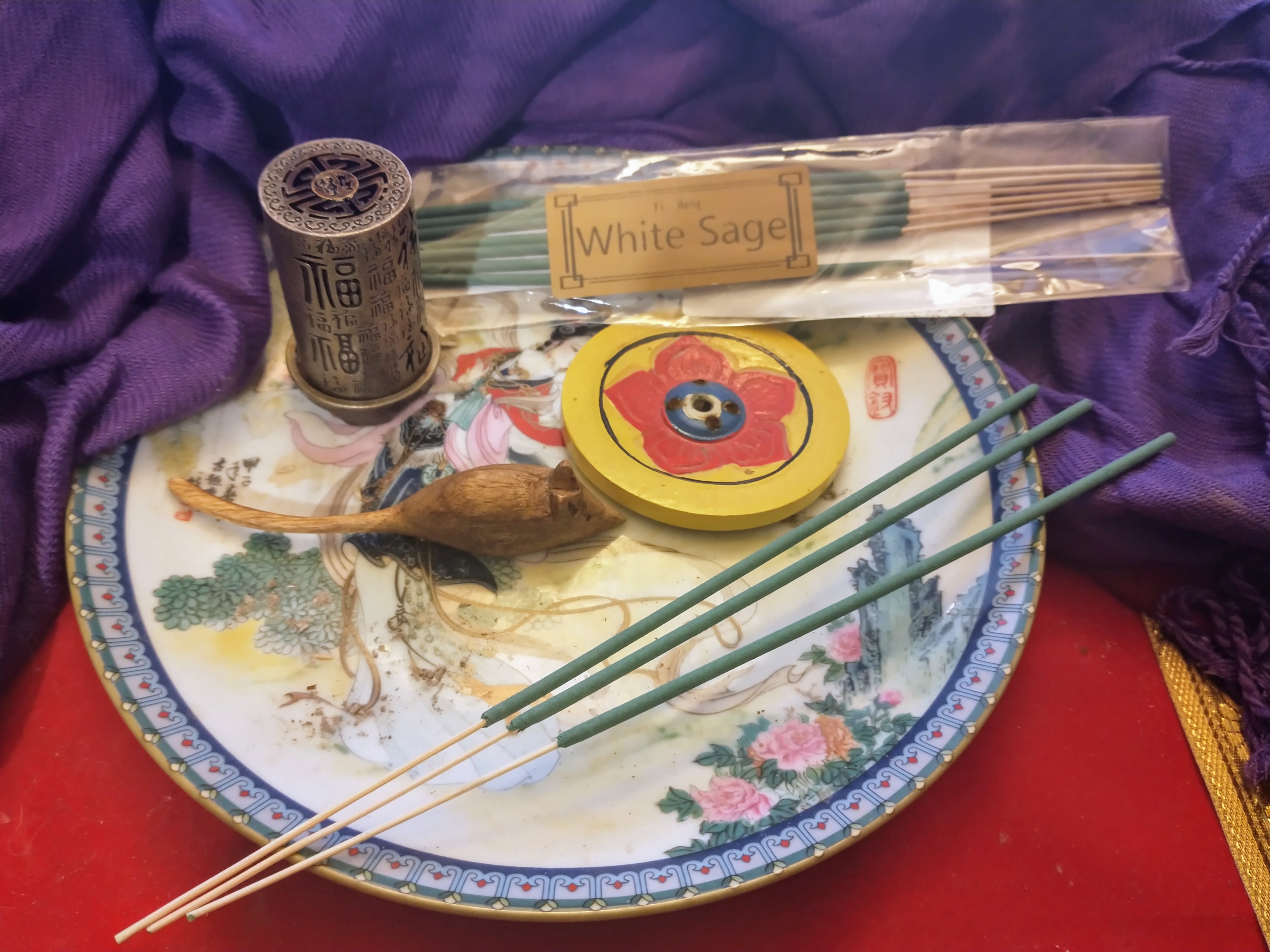 |
| Temu White Sage Incense Sticks Mar 2025 - Score: 24/50 |
 |
| Temu (Shenzhon Xuxinda) Small Auspicious Cloud Sandalwood Mar 2025 - Score: 23/50 |
 |
| Temu Yongchun County Small Auspicious Clouds Osmanthus (PW) Jan 2026 - Score: 23/50= |
 |
| Temu Small Auspicious Cloud Ciqcai Sweet-scented Osmanthus (PW) Jan 2026 - Score: 22/50= |
 |
| Yujing Mou Dan (Peony Fragrance) Joss Sticks (P) Aug 2025 - Score: 22/50= |

 |
| SHHT GmbH Incense Cones Oct 2022 - Score: 22/50 |
 |
| Jin Wan Lai Wealth Offering Aug 2013 - Score: 22/50* |
 |
| Temu Yongchun County Small Auspicious Clouds Goose Pear (PW) Jan 2026 - Score: 20/50↑ |
 |
June 2014 Score: 20/50* |
 |
| Chan Luen Hing San Po Joss Sticks (D) Aug 2025 - Score: 20/50= |
 |
| Hebei Gucheng Sandalwood Incense Coils Feb 2017 - Score: 19/50* |
 |
| Temu Small Auspicious Clouds Mugwort Mar 2024 - Score: 17/50 |
 |
| Backflow cones from China (P) Dec 2017 - Score: 02/50* |
Reviews: 35
Top score: 40
Bottom score: 02
Top score: 40
Bottom score: 02
Average: 24/50
Conclusion: I'm not a fan of wood based incense, especially when the wood is not fragrant. There is a long tradition, and a significant culture of incense in China, so I'm still interested in the country, but I've not yet found an incense that has really impressed me, though I am relaxing into the spirit of things and allowing the scents to come to me. As of May 2025 I am being somewhat positive and generous with my scores while adopting a glass-half-full attitude toward this subtle and simple incense. I feel if I'm too closed off and negative I won't have a chance of entering into a full appreciation of the gentle scents of this country's incense culture. When I've finished the bundles of Japanese and Chinese incense I have for review, I will review them again and see where I end up.
Conclusion: I'm not a fan of wood based incense, especially when the wood is not fragrant. There is a long tradition, and a significant culture of incense in China, so I'm still interested in the country, but I've not yet found an incense that has really impressed me, though I am relaxing into the spirit of things and allowing the scents to come to me. As of May 2025 I am being somewhat positive and generous with my scores while adopting a glass-half-full attitude toward this subtle and simple incense. I feel if I'm too closed off and negative I won't have a chance of entering into a full appreciation of the gentle scents of this country's incense culture. When I've finished the bundles of Japanese and Chinese incense I have for review, I will review them again and see where I end up.
***
 |
| Incense around the world |

No comments:
Post a Comment
Please leave a comment: